Skip to content
Jordan Hudgens
Current hands-on work

Production AI, grounded in delivery.

I build the systems behind enterprise AI workflows: closed-circuit LLMs, orchestration, encoding and context, retrieval, self-hosted inference and operational integrations. At Encapsa, the platform spans 300+ live deployments across seven verticals.

live enterprise deployments
300+
verticals
7
full-time team members
8

How the platform fits together.

Co-founder & CTO; eight-person team.

The AI foundation starts with a custom encoding/decoding layer covering 100% of platform data for AI-based lookups. The governed Context Engine extends that foundation. Current work spans closed-circuit LLMs, multiple models, retrieval, NLP-to-SQL and end-to-end workflows for products, internal training and usage tooling.

The 100% figure describes data coverage, not lookup accuracy. Architecture work includes Rust/Axum, Ruby on Rails, Node, React, Temporal, RunPod and Fly.io; not every planned integration runs in every live deployment.

System picture

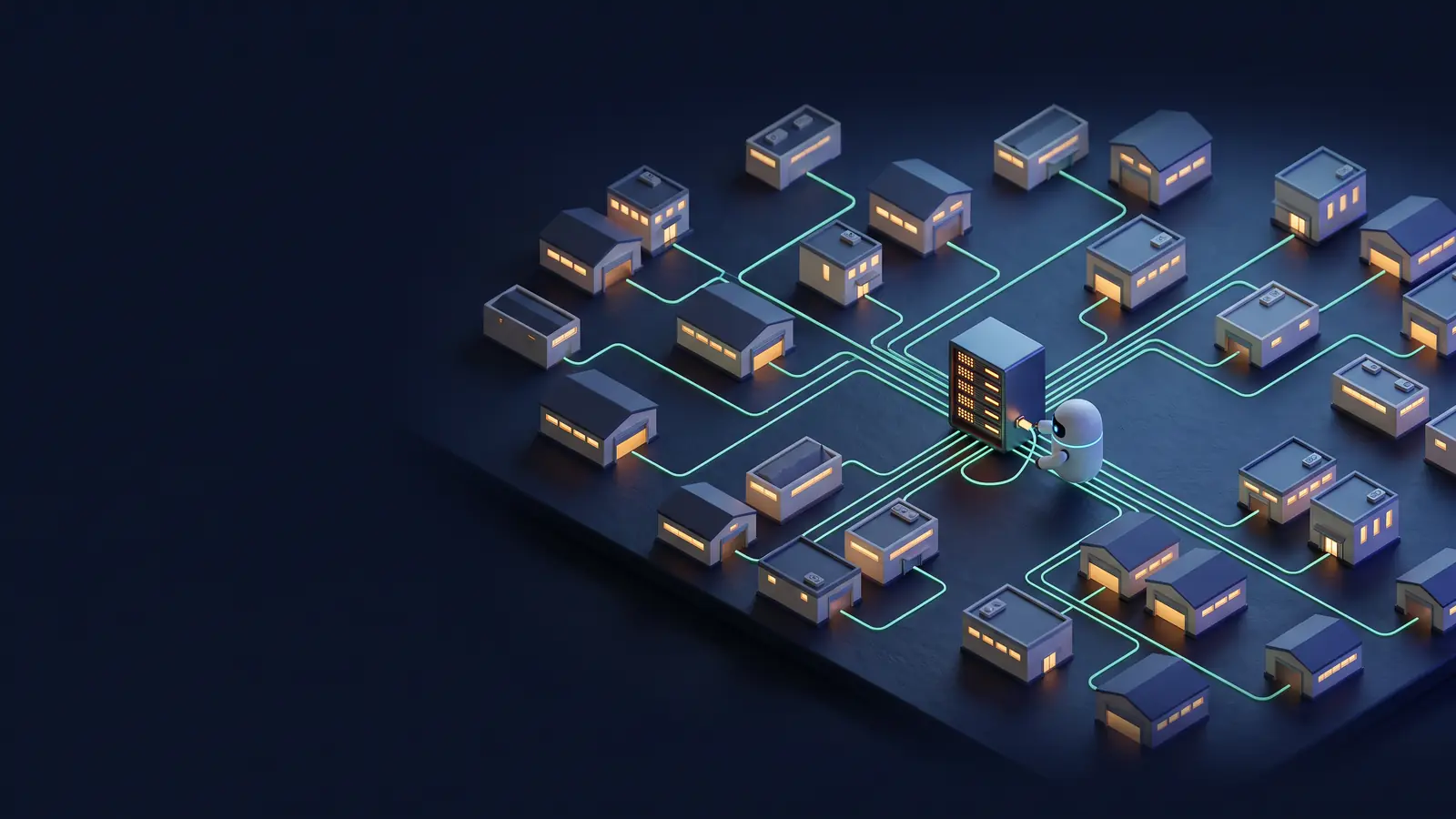
Encapsa capability map

A map of platform capabilities, not the topology of every customer deployment.

Integration
  • ERP, CRM and POS connectors
  • MCP tooling
Orchestration
  • Multi-model routing
  • Agents and tool use
  • Workflow automation
Retrieval
  • RAG and PageIndex
  • Milvus
  • BGE-M3 and Qwen3 embeddings
Data and context
  • Custom encoding/decoding for AI-based lookup across 100% of platform data
  • Governed Context Engine extending that foundation
Inference
  • Self-hosted vLLM
  • Closed-circuit/on-prem options
Workflow engineering
  • End-to-end product, internal-training and usage workflows
  • Temporal-related durable-execution work
Delivery
  • Shared, single-tenant, and on-prem deployments

Commercial underwriting, without the three-day wait

3 days → 15 minutes

Reported submission-to-decision time

Context
Commercial underwriting with a three-day submission-to-decision workflow.
Work
Automated commercial underwriting using ACORD submission ingest, loss-run extraction and risk-memo generation.
Reported outcome
Submission-to-decision: three days to 15 minutes; 300+ staff hours recaptured per month; no added headcount.
Field reporting connected to operational data

Context
Ticketing and reporting applications for an energy-services business.
Work
Replaced ticketing/reporting applications with NLP-to-SQL and workflow automation for an energy-services business.
Reported outcome
Tens of thousands of dollars saved annually.

A board presentation from enrollment data

Context
Preparing a board presentation from enrollment data.
Work
Generated a board deck using SQL enrollment data and deep research.
Reported outcome
Weeks of preparation saved.

Training generated from existing documents

Context
New-hire training based on legacy documentation and a prior LMS.
Work
Generated new-hire training from legacy documentation.
Reported outcome
$10K+ per year saved compared with the prior LMS.

The current practice.

Jordan uses Claude Code CLI, Codex CLI, custom Goose harness, and Mistral daily. He teaches customer teams during every deployment, conducts ongoing training outside deployments, and builds internal training and usage tooling at Encapsa.

Daily coding agents

  • Claude Code CLI
  • Codex CLI
  • custom Goose harness
  • Mistral

As Co-founder & CTO at Encapsa AI, Inc., Jordan leads eight full-time team members: three AI/ML engineers, two full-stack engineers, one UX/UI designer, and two customer-success staff.

Performance, measured.

Where performance work shows up: a measured consulting result, current Rust and inference architecture, teaching that proves changes with data, and open-source libraries built around web performance.
  • Faster queries, measured

    For Eventbrite, in 2014–2015, Jordan built admin dashboards and Redis-based caching that improved query performance by 90%+. The work came through his independent consulting practice.

  • Rust and inference

    Architecture work at Encapsa includes Rust/Axum and self-hosted vLLM inference, alongside Ruby on Rails, Node, React and Temporal. Not every planned integration runs in every live deployment.

  • Measurement in the teaching

    Jordan’s Dev Guides teach engineers to prove a change with data: agent evaluations scored against real outcomes, and model-tier routing kept only when telemetry shows that checked runs spend less.

  • Performance-focused open source

    The OpenSite organization publishes a page-speed family of React libraries built around web performance, from Core Web Vitals hooks to image, routing and form components, and markdown-ai-cite-remove, a Rust crate with Criterion benchmarks. These are credited to the organization rather than to Jordan alone.

Enterprise delivery before the current AI stack.

Quip

Quip, the oral-care subscription brand, 2015–2017: built the platform from scratch; it scaled to multi-million-dollar revenue.

Eventbrite

Eventbrite, 2014–2015: admin dashboards and Redis-based caching that improved query performance by 90%+.

Chevron

Chevron via Trackr, 2013–2014: field-ticketing systems.

Oxy

Oxy via Wilson Systems/Trackr, 2011–2014: field-ticketing systems; the quality-analysis engine increased ticketing quality by 75%.

Yahoo

Yahoo, Fall 2007–Spring 2008: six-month video-player/CDN integration contract.

Code in the open.

Selected projects from the OpenSite organization, credited to the organization rather than to Jordan alone.

opensite-ui

React components for web and AI-driven site-building workflows.

opensite-skills

Reusable guidance and skills for AI coding agents.

page-speed-hooks

Typed React hooks for common application behavior.

From working code to the stage.

Recording published · Confreaks

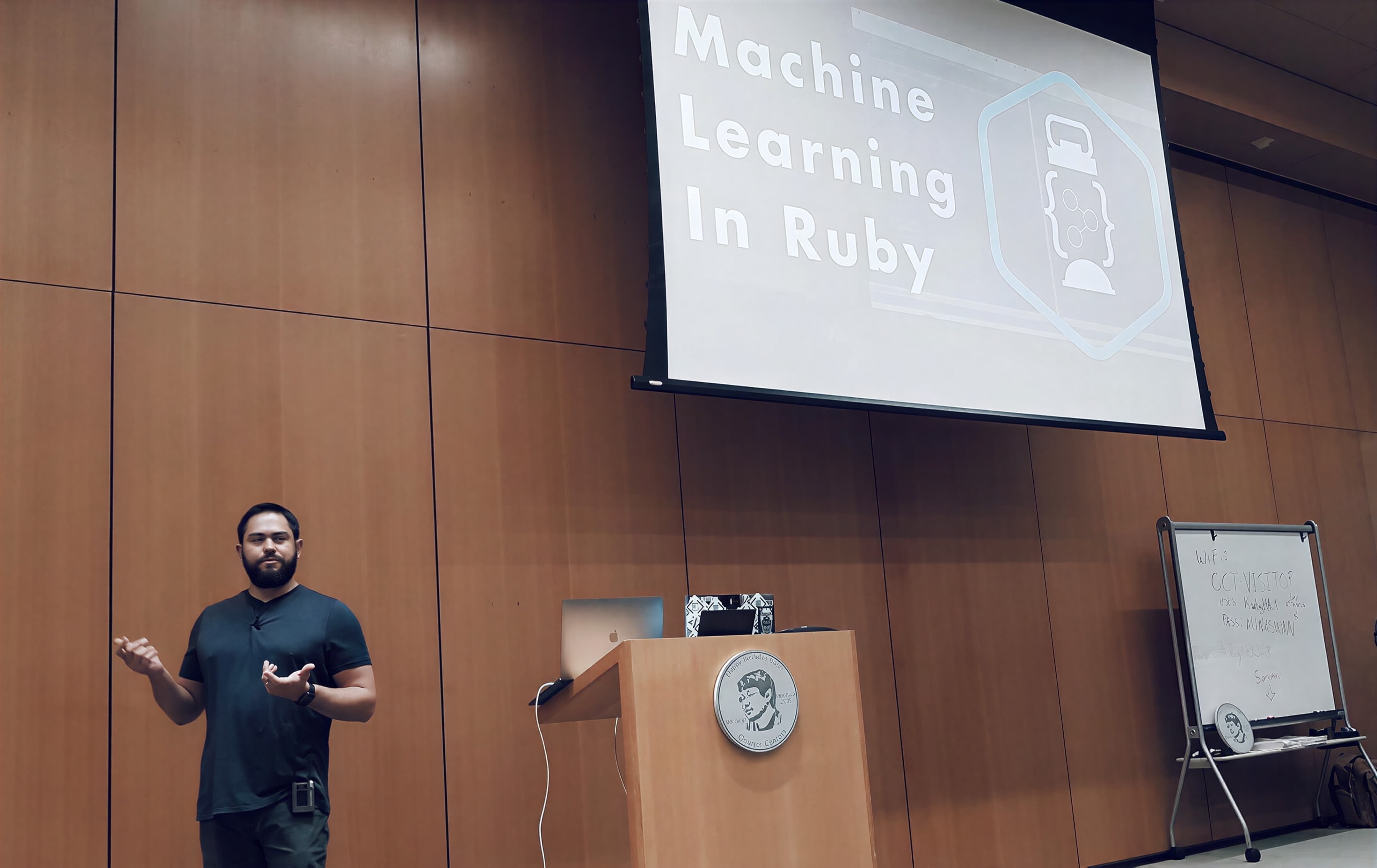
RubyHACK 2018: Machine Learning Microservices in Rails by Jordan Hudgens

A practical approach to implementing machine learning algorithms into Rails applications.

Archival conference talk. The date shown is the recording publication date.

YouTube loads only when you choose to play.

Watch on YouTube
Jordan presenting Machine Learning Microservices in Rails at RubyHACK 2018
RubyHACK 2018 · Machine Learning Microservices in Rails
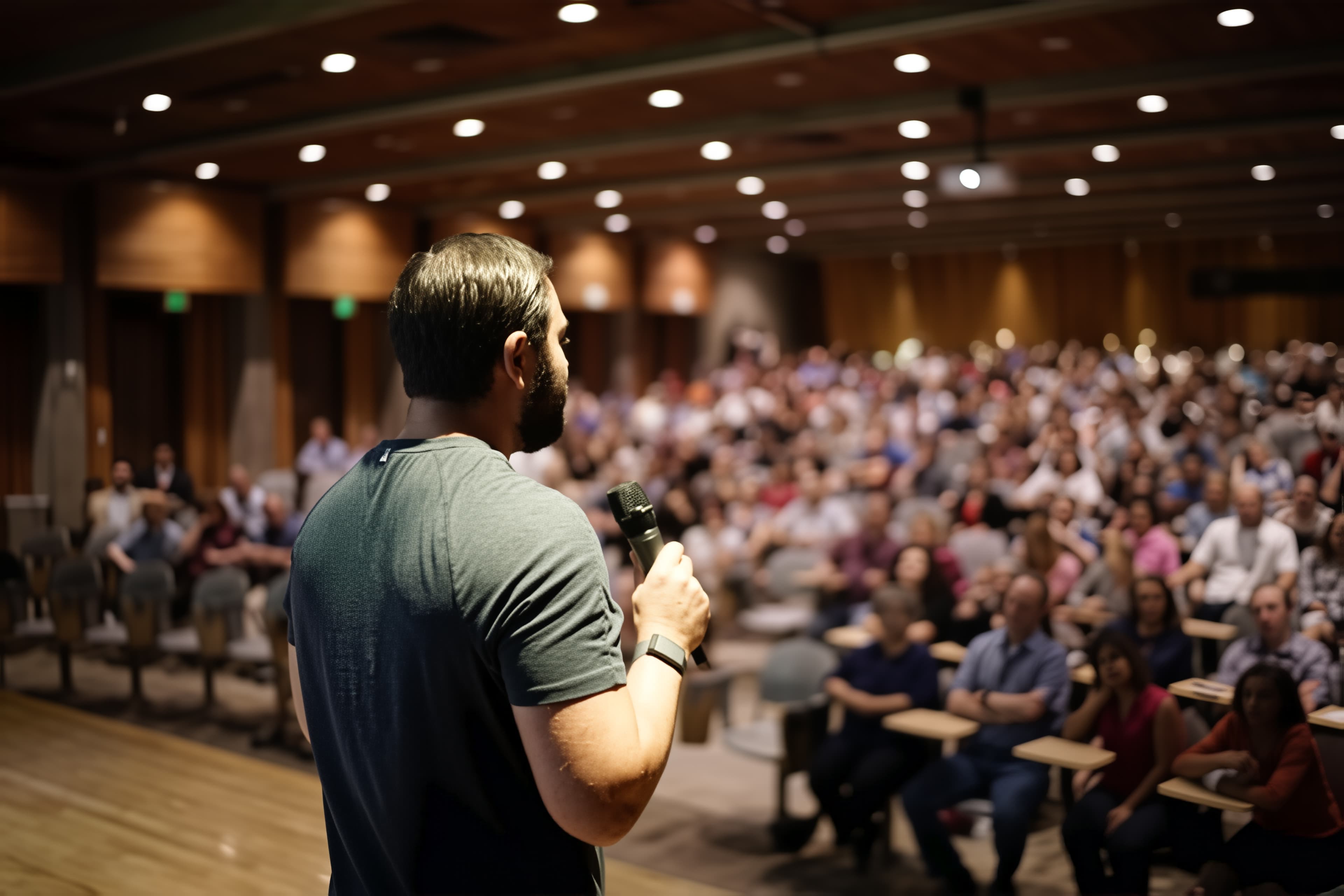
Jordan addressing an auditorium of attendees at the Utah Code for Success keynote
Code for Success · Utah keynote

On development and teaching.

March 2017 · Archival podcast

My Ruby Story MRS-008: Jordan Hudgens.

A conversation about the path into development and technical education.

Engineering projects

Questions about the engineering

What the team builds, what the coverage figure means, daily tools and who delivered the results.

What does Jordan’s team build at Encapsa?

Jordan’s eight-person team builds closed-circuit LLM systems, multi-model agents and tool use, MCP integrations, RAG and PageIndex retrieval, self-hosted vLLM inference, NLP-to-SQL and enterprise integrations. The platform supports shared, single-tenant, and on-prem deployments and spans 300+ live deployments across seven verticals.

What does the 100% coverage figure mean?

Custom encoding/decoding covers 100% of Encapsa platform data for AI-based lookups, and the governed Context Engine extends that foundation. The figure describes data coverage. It is not a measure of lookup accuracy, retrieval quality or model output, and no accuracy benchmark is published.

Which coding agents does Jordan use daily?

Jordan uses Claude Code CLI, Codex CLI, custom Goose harness, and Mistral daily. The application and infrastructure stack he works across includes Rust/Axum, Ruby on Rails, Node, React, Temporal, RunPod and Fly.io. The list describes current work, and not every planned integration is live platform-wide.

What Rust and performance work has Jordan done?

For Eventbrite, Jordan built Redis-based caching that improved query performance by 90%+. Architecture work at Encapsa includes Rust/Axum and self-hosted vLLM inference. His Dev Guides teach engineers to prove changes with data, and the OpenSite organization publishes performance-focused React libraries and a Rust crate with Criterion benchmarks.

Are the customer results individual or team outcomes?

They are selected deliveries by the Encapsa team Jordan leads, with customers kept anonymous. Commercial underwriting went from three days to 15 minutes with 300+ staff hours recaptured monthly; the energy-services, education and hospitality results are reported separately and never combined.

The same systems thinking shapes the teaching work. See how the instructor-development program was built.

Instructor development

Teaching at scale. Building in production.

Curricula used by 250,000+ learners across platforms and schools.

300+ live enterprise deployments across seven verticals.